
Fun Fitness for Parkinson’s: Enjoyable and Playful Daily Movement
By Patrick LoSasso, President of Parkinson’s Community Los Angeles
and
Ziya “Z” Altug, PT, DPT, MS, DipACLM, OCS
Introduction
Exercise is a core component of Parkinson’s disease management. To participate safely and effectively, persons with Parkinson’s (PWP) are advised to begin an exercise program with a physical therapist (PT) and/or occupational therapist (OT) who specializes in Parkinson’s disease, then transition to a qualified personal trainer experienced in Parkinson’s-specific programming.
One-on-one training instruction with structured progression helps the PT or OT individualize the program to the PWP’s needs. A tailored approach ensures safety, optimizes quality of movement, and builds confidence before advancing to independent or group exercise.
What is Fun Fitness?
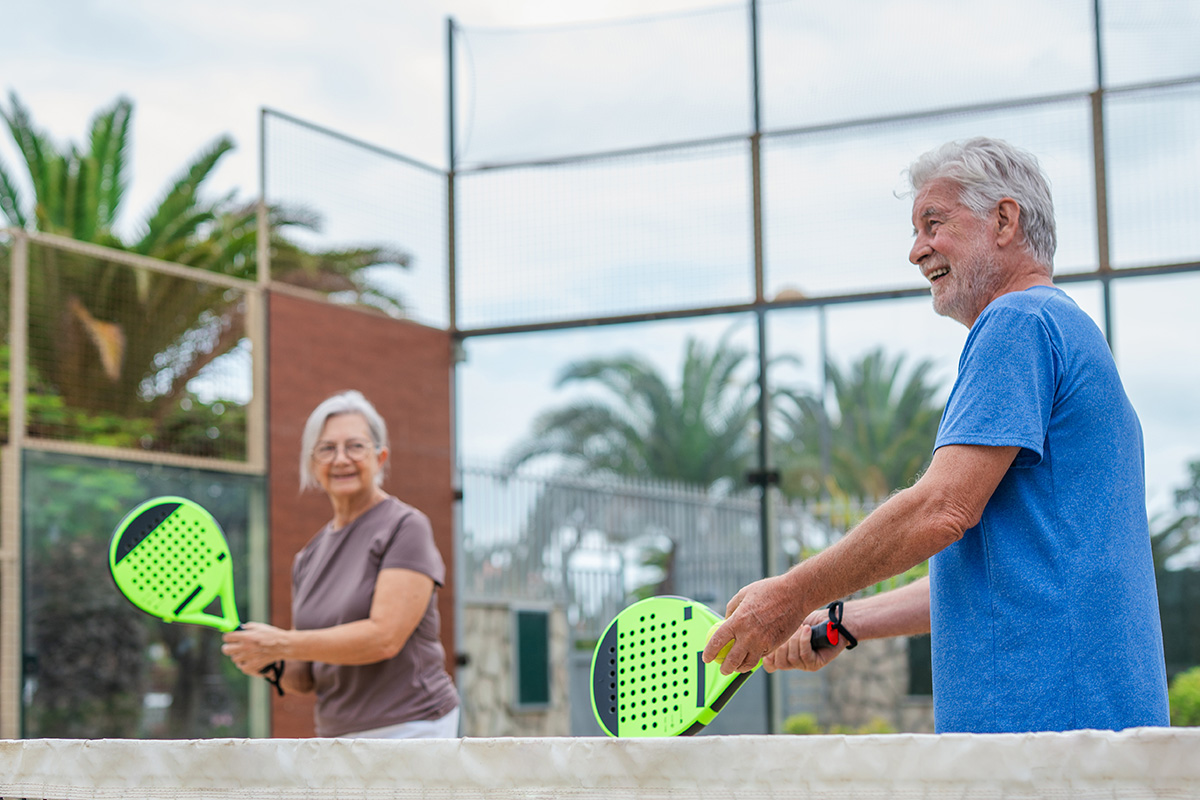
Implementing an exercise program that is both fun and effective is vitally important and will help you become proactive in the management of your disease. We propose incorporating fun, familiar movements that can be performed at home as part of your therapy, rehab or fitness program. Including these playful activities/actions can make your workouts engaging and enjoyable. This may also encourage compliance.
For example, the following fun sports movements and playful activities may be incorporated into a rehab or fitness program:
Hitting A Tennis Ball
Perform a forehand and backhand tennis swing without a racket with the right and then left hand in a safe manner.
Throwing A Baseball
Perform a baseball pitching motion without a baseball with the right and then left hand.
Bowling For a Strike
Perform a bowling motion without a bowling ball with the right and then left hand.
Shooting a Basketball
Perform a basketball set shot motion without a basketball with the right and then left hand.
Throwing the Leaves Over a Fence
Perform a leaf throwing motion over a fence by reaching down to the imaginary pile of leaves, grab a fist full in each hand and swing the arms up and across as if you’re tossing the leaves over the fence.
Walking Through the Swamp (“Swamp Walk”)
Perform a walk through an imaginary swap by raise your knees high as if picking your foot out of the muck. Switch back and forth in a slow marching manner.
What Does the Research Say?
There are no specific research studies or guidelines for the above suggested fun fitness exercises, but enjoying physical exercise is a key for maintaining physical activity engagement (Chakraverty et al., 2024).
However, studies indicate that exercise may improve symptoms and quality of life and reduce non-motor symptoms such as anxiety, apathy and depression in PWP (Kwok et al., 2019; Song et al., 2025; Swarnakar et al., 2023; Trinh et al., 2026).
One study by de Laat and colleagues (2024) suggests that “Exercise has been reported to slow the clinical progression of Parkinson’s disease (PD).” Also, see other studies for the benefits of exercise (Ahlskog 2018; de Laat et al., 2024; Johansson et al., 2022; Li et al., 2023; Schenkman et al. 2018).
A recent article by Trinh and colleagues in The Lancet Neurology states that “Overall, integrating lifestyle modifications into routine care offers a promising, accessible avenue to improve quality of life and potentially alter the progression of Parkinson's disease.”
Exercise Guidelines
The current exercise prescription guidelines for Parkinson’s released by the American College of Sports Medicine recommend the following (ACSM 2026):
Adapted from the American College of Sports Medicine, 2026, pages 528-529.
- PD = Parkinson’s Disease
For some PWP, reaching these guidelines may not be possible, but engaging in any amount of aerobic, strength, flexibility and neuromotor activities is beneficial.
Getting Started
To begin safely:
- Wear loose, comfortable clothing.
- Choose properly fitting athletic shoes that have a wider and stable base, roomy toe box, nonslip soles and that are easy to get on/off.
- Keep water nearby to maintain hydration. Take sips of water at regular intervals to maintain hydration.
- Learn proper techniques from a qualified therapist or instructor, ideally in person during initial sessions.
Class Selection Tips
When selecting a class or trainer:
- Confirm experience working with PWP.
- Ask about small class sizes to allow individualized attention.
- Ensure programming includes both functional and balance training components.
Safety Precautions for Parkinson’s
Before beginning any type of exercise program, particularly for individuals with balance concerns, safety is essential:
- Obtain medical clearance for exercise before starting a program.
- Perform your training sessions near a stable surface or wall for support.
- Begin with shorter sessions to prevent excessive fatigue.
- Progress gradually under professional supervision.
Helpful Resources
- American Parkinson Disease Association
- Davis Phinney Foundation for Parkinson’s
https://davisphinneyfoundation.org
- Parkinson’s Foundation
- SmartXPD
- The Michael J Fox Foundation for Parkinson’s Research – Best shoes for Parkinson’s
https://www.michaeljfox.org/news/whats-best-shoe-parkinsons
Final Thoughts
Exercise is not optional in Parkinson’s; it is the foundational pillar in disease management. In fact, PWP will often hear the phrase, “Exercise is Medicine!” Structured, supervised, and task-specific training can improve mobility, strength, balance, and independence. Combining functional training with enjoyable sport-based movements may also enhance adherence and long-term participation. Professional guidance remains essential to ensure safety and appropriate progression.
References:
American College of Sports Medicine (ACLM). Parkinson’s Disease. In: ACSM’s Guidelines for Exercise Testing and Prescription, 12th edition. Philadelphia, PA: Wolters Kluwer, 2026, pp. 520-553.
Ahlskog JE. Aerobic exercise: evidence for a direct brain effect to slow Parkinson disease progression. Mayo Clin Proc. 2018;93(3):360-372.
https://pubmed.ncbi.nlm.nih.gov/29502566/
Chakraverty D, Roheger M, Dresen A, et al. "There is only one motive … fun." Perspectives of participants and providers of physical exercise for people with Parkinson's disease. Disabil Rehabil. 2024;46(23):5591-5600.
https://pubmed.ncbi.nlm.nih.gov/38343163/
de Laat B, Hoye J, Stanley G, et al. Intense exercise increases dopamine transporter and neuromelanin concentrations in the substantia nigra in Parkinson's disease. NPJ Parkinsons Dis. 2024;10(1):34.
https://pubmed.ncbi.nlm.nih.gov/38336768/
Johansson ME, Cameron IGM, Van der Kolk NM, et al. Aerobic exercise alters brain function and structure in Parkinson's disease: A randomized controlled trial. Ann Neurol. 2022;91(2):203-216.
https://pubmed.ncbi.nlm.nih.gov/34951063/
Kwok JYY, Kwan JCY, Auyeung M, et al. Effects of mindfulness yoga vs stretching and resistance training exercises on anxiety and depression for people with Parkinson disease: a randomized clinical trial. JAMA Neurol. 2019;76(7):755-763.https://pubmed.ncbi.nlm.nih.gov/30958514/
Li JA, Loevaas MB, Guan C, et al. Does exercise attenuate disease progression in people with Parkinson's disease? a systematic review with meta-analyses. Neurorehabil Neural Repair. 2023;37(5):328-352.
https://pubmed.ncbi.nlm.nih.gov/37166181/
Schenkman M, Moore CG, Kohrt WM, et al. Effect of high-intensity treadmill exercise on motor symptoms in patients with De Novo Parkinson disease: A Phase 2 Randomized Clinical Trial. JAMA Neurol. 2018;75(2):219-226.
https://pubmed.ncbi.nlm.nih.gov/29228079/
Song H, Ge S, Li J, Jiao C, Ran L. Effects of aerobic and resistance training on walking and balance abilities in older adults with Parkinson's disease: A systematic review and meta-analysis. PLoS One. 2025;20(1):e0314539
https://pubmed.ncbi.nlm.nih.gov/39787155/
Swarnakar R, Wadhwa S, Venkataraman S, Goyal V, Vishnubhatla S. Efficacy of exercises in early-stage Parkinson's disease (PARK-EASE trial): Single-blind, randomised, controlled trial. BMJ Neurol Open. 2023;5(2):e000499.
https://pubmed.ncbi.nlm.nih.gov/38027470/
Trinh J, de Vries NM, Chan P, Dekker MCJ, Helmich RC, Bloem BR. The role of lifestyle interventions in symptom management and disease modification in Parkinson's disease. Lancet Neurol. 2026;25(1):90-102.
https://pubmed.ncbi.nlm.nih.gov/41109323/
Written by Patrick LoSasso, President of Parkinson’s Community Los Angeles and founder of SmartXPD (https://www.smartxpd.com/) and Ziya “Z” Altug, PT, DPT, MS, DipACLM, OCS.
Donate Today,
Change Lives Forever
PCLA is powered by generous contributions from people like you.
Please consider donating today so we can continue to provide critical support to those impacted by Parkinson’s.
