
Walking for Parkinson’s: Building Confidence and Daily Function
Introduction
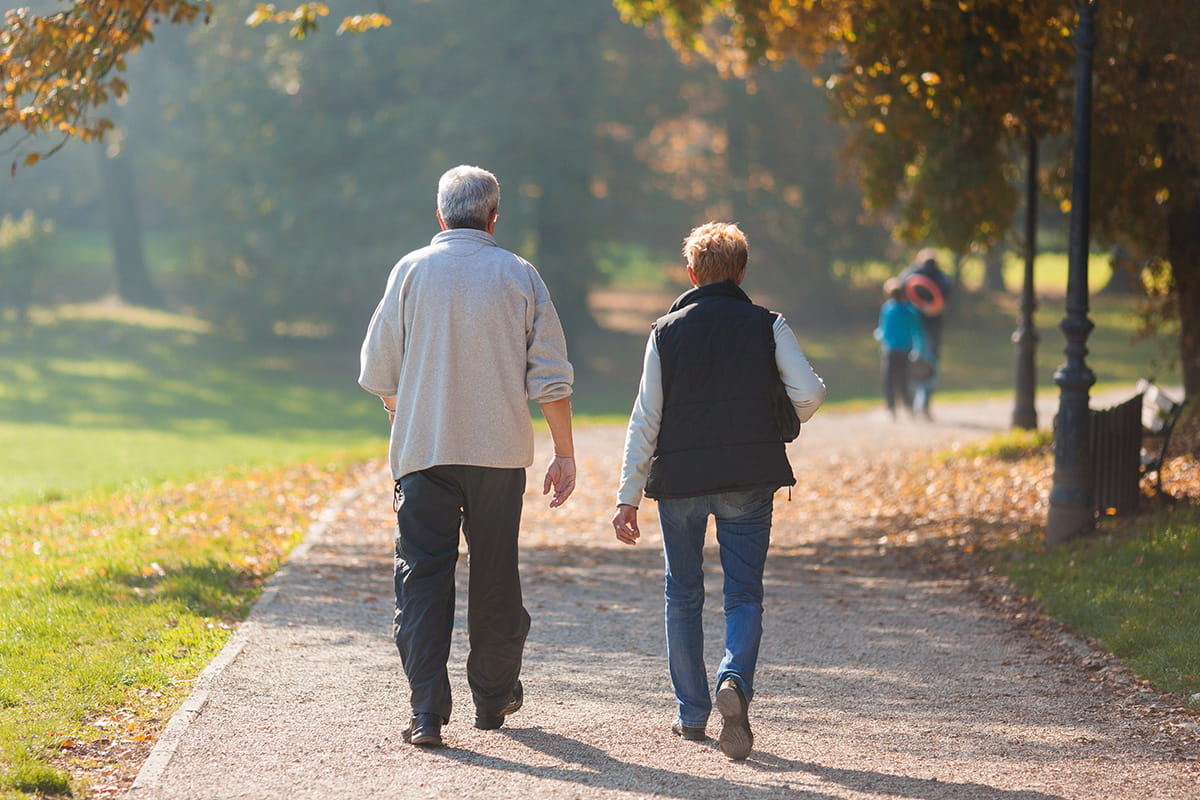
Walking is an essential activity for independence and quality of life, and it is an accessible and effective form of physical activity for individuals with Parkinson’s.
Walking is a rhythmic and repetitive activity that engages multiple motor and cognitive systems simultaneously. When practiced intentionally, it can serve as both an exercise intervention and a functional training tool for daily life.
Components of Walking
Walking is a task that integrates the following components:
- Postural control to maintain upright alignment
- Stride length and cadence for efficient forward movement
- Arm swing and trunk rotation for balance and momentum
- Sensory input and attention, particularly during turns or dual-task situations
Structured walking programs often focus on cueing, posture, and rhythm to improve walking efficiency and decrease fall risk.
Benefits of Walking
In general, regular walking has been shown to:
- Improve cardiovascular fitness
- Enhance lower extremity endurance
- Enhance balance and mobility
- Reduce fatigue and stiffness
- Support mental health and overall well-being
For individuals with Parkinson’s, walking also reinforces functional mobility needed for community participation and independence.
What Does the Research Say?
Research specific to walking indicates potential benefits as follows:
- A study by Mak and colleague in the Journal of Parkinson’s Disease (2021) state that “The six-month brisk walking and balance program alleviates motor symptoms, promotes functional and gait performance, walking capacity, and dynamic balance in people with mild to moderate Parkinson’s disease.”
- A study by Ono and colleague in the PM&R (2022) journal state that “There was moderate-quality evidence that pole walking [walking training with poles] improved walking speed in patients with Parkinson disease.”
Nordic walking and walking with external cues (such as poles or rhythmic pacing) may offer additional benefits by promoting upright posture, arm swing, and symmetrical movement patterns.
Getting Started
- Choose a flat, open area for practice.
- Wear loose, comfortable clothing.
- Keep water handy to stay hydrated.
- Walk with a physical therapist or occupational therapist if there are balance concerns or freezing is present. Gradually progress to walking with a care partner, friend, or family member.
Safety Precautions for Parkinson’s
Before starting a walking program, particularly for individuals with balance concerns, safety is essential:
- Obtain medical clearance from a healthcare provider before beginning an exercise program.
- Walk near a stable surface or use trekking poles or assistive devices if needed.
- Start with short sessions to avoid fatigue and motor deterioration.
- Avoid crowded or uneven environments during early training stages.
- Supervised walking may be appropriate for individuals with a history of falls or freezing of gait.
Helpful Resources
- America Walks https://americawalks.org
- Los Angeles Walks https://www.losangeleswalks.org
- Walk with a Doc https://walkwithadoc.org/ (This program offers physician-led walking groups that combine education, social connection, and safe physical activity.)
Final Thoughts
Walking is a practical, adaptable, and evidence-supported activity for individuals living with Parkinson’s disease. When performed with attention to posture, rhythm, and safety, it can improve mobility, confidence, and participation in daily life. As with any intervention, individualized guidance and progression are key to maximizing benefits while minimizing risk.
References
- Mak MKY, Wong-Yu ISK. Six-month community-based brisk walking and balance exercise alleviates motor symptoms and promotes functions in people with Parkinson's disease: a randomized controlled trial. J Parkinsons Dis. 2021;11(3):1431-1441. https://pubmed.ncbi.nlm.nih.gov/33967056/
- Ono K, Nishimoto J, Imura T, et al. The effects of walking training with poles on walking ability: A systematic review and meta-analysis of randomized controlled trials. PM R. 2023;15(8):1026-1037. https://pubmed.ncbi.nlm.nih.gov/35943832/
Written by Ziya “Z” Altug, PT, DPT, MS, DipACLM, OCS
Donate Today,
Change Lives Forever
PCLA is powered by generous contributions from people like you.
Please consider donating today so we can continue to provide critical support to those impacted by Parkinson’s.
