
Help, I’m Trapped in My Shirt! (Getting Dressed with Parkinson’s)
Getting dressed with Parkinson’s can come as a surprise. Sandy Yaras, founder of PCLA, understood that better than most.
Editor’s note: This updated article preserves Sandy’s original reflection. It also adds general education about dressing with Parkinson’s. Sandy was the late husband of PCLA’s Judy Yaras.
Sandy Yaras on Getting Trapped in a Shirt
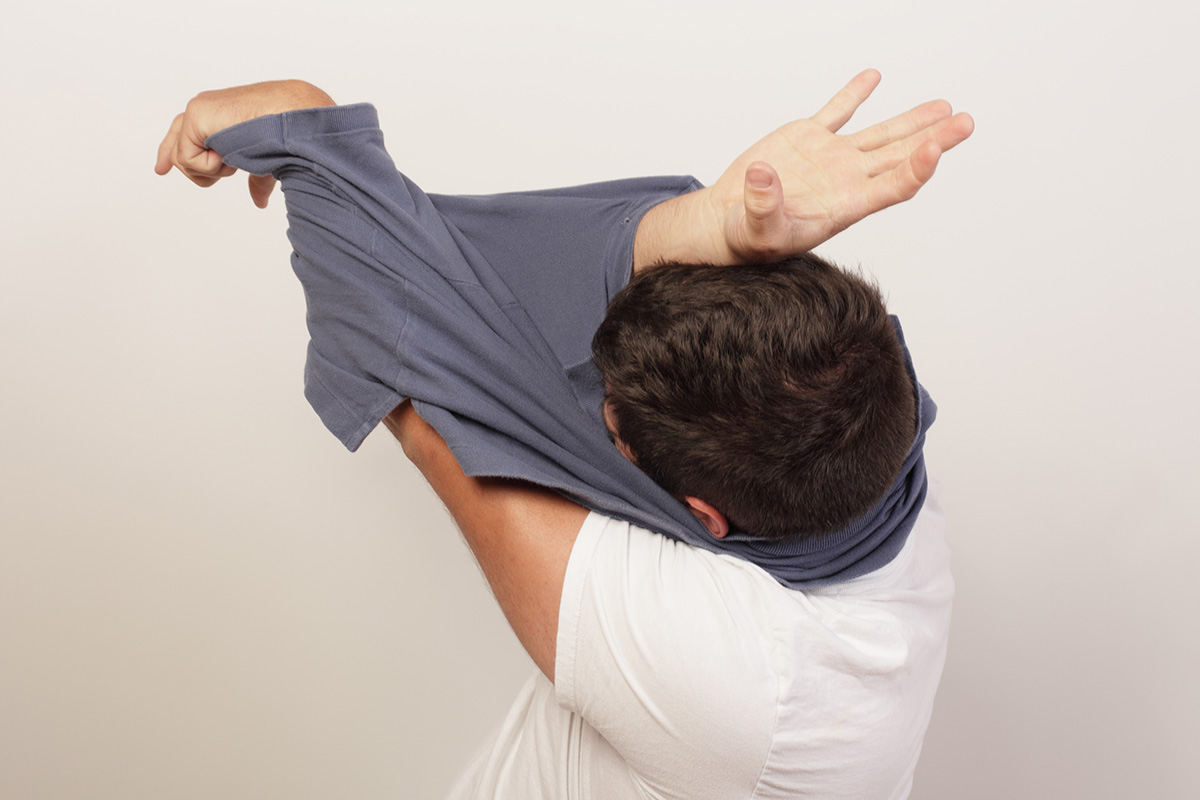
“Help, I’m trapped in my shirt.”
For Sandy, it was a funny line that described a frustrating part of daily life with Parkinson’s.
He believed people who use adaptive products should help design them. A button hook might help close a button but offer no help when it was time to get undressed. A zipper pull was not much use if he could not join the two sides of the zipper.
Then there was the T-shirt.
Sandy would lay one face down on a bed or chair. He could slide his arms inside and find the armholes. Most days this worked. On a humid day or just after a shower, the shirt could stick halfway down. His arms were above his head, and fabric blocked his vision. He was trapped!
Coats brought a different chase for the second armhole. Buttoned shirts could take far too long. Sandy joked that every company making adaptive products needed a “Parky test pilot.”
He pointed out that a product can look useful in a catalog and still miss the hardest part of a task. Good design starts by listening to the person who will use it.
Why Can Parkinson’s Make Getting Dressed Hard?
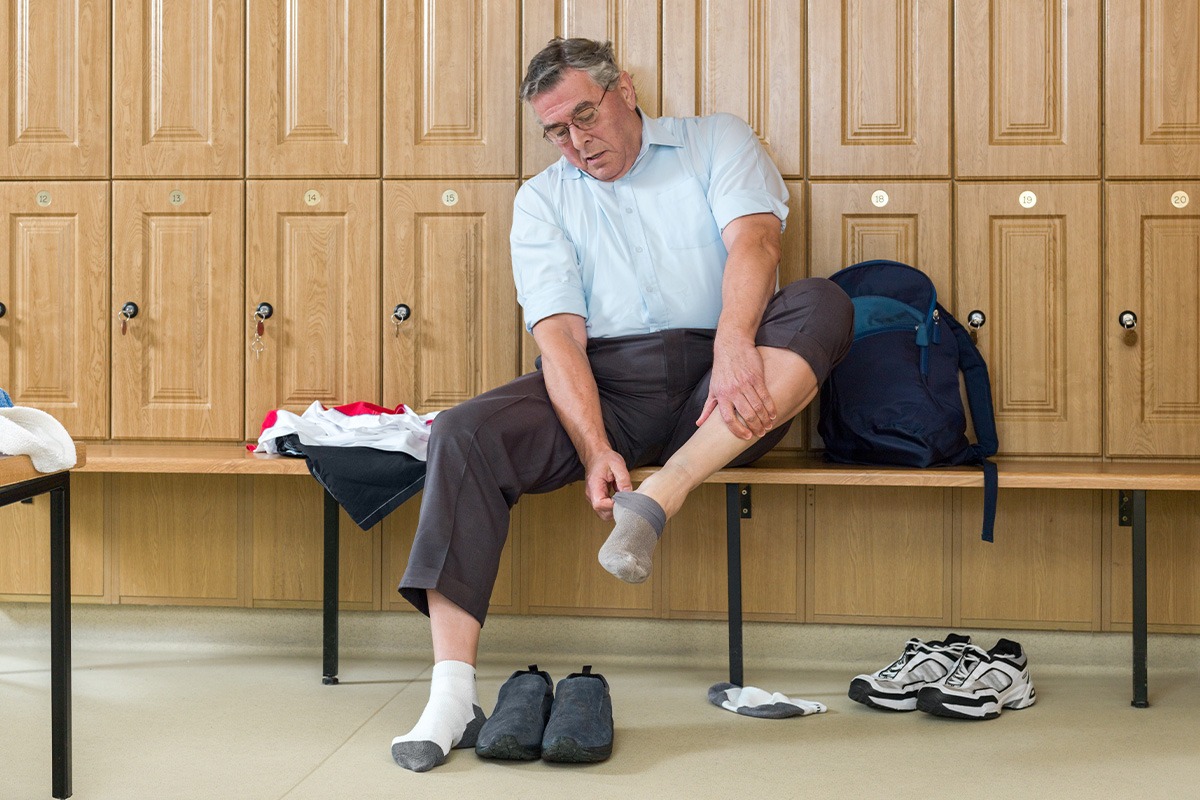
Parkinson’s can affect the speed and control of movement. It can also affect balance. As a result, a dressing routine may feel slower or less predictable.
Several changes may play a part:
- Slowness of movement: Starting a movement may take longer. A series of steps can also be harder to complete.
- Stiffness: Reaching behind the body may feel limited. Guiding an arm into a sleeve may take more effort.
- Tremor or reduced dexterity: Small fasteners can be difficult to control. This may affect buttons or zipper tabs.
- Dyskinesia: Involuntary movement can interrupt the task or make clothing harder to guide.
- Balance changes: Bending toward the feet may feel less steady. Standing on one leg to step into clothing may also be difficult.
Not everyone has the same symptoms. The challenge may also change from one day to the next.
In one small occupational therapy program evaluation, most of the 23 participants identified upper-body or lower-body dressing as a problem. A newer study of upper-limb function in Parkinson’s found that pulling on socks was among the tasks participants often called both difficult and meaningful.
These studies do not describe every person with Parkinson’s. They do show why a private morning task can have a large effect on independence.
What Is Adaptive Clothing for Parkinson’s?
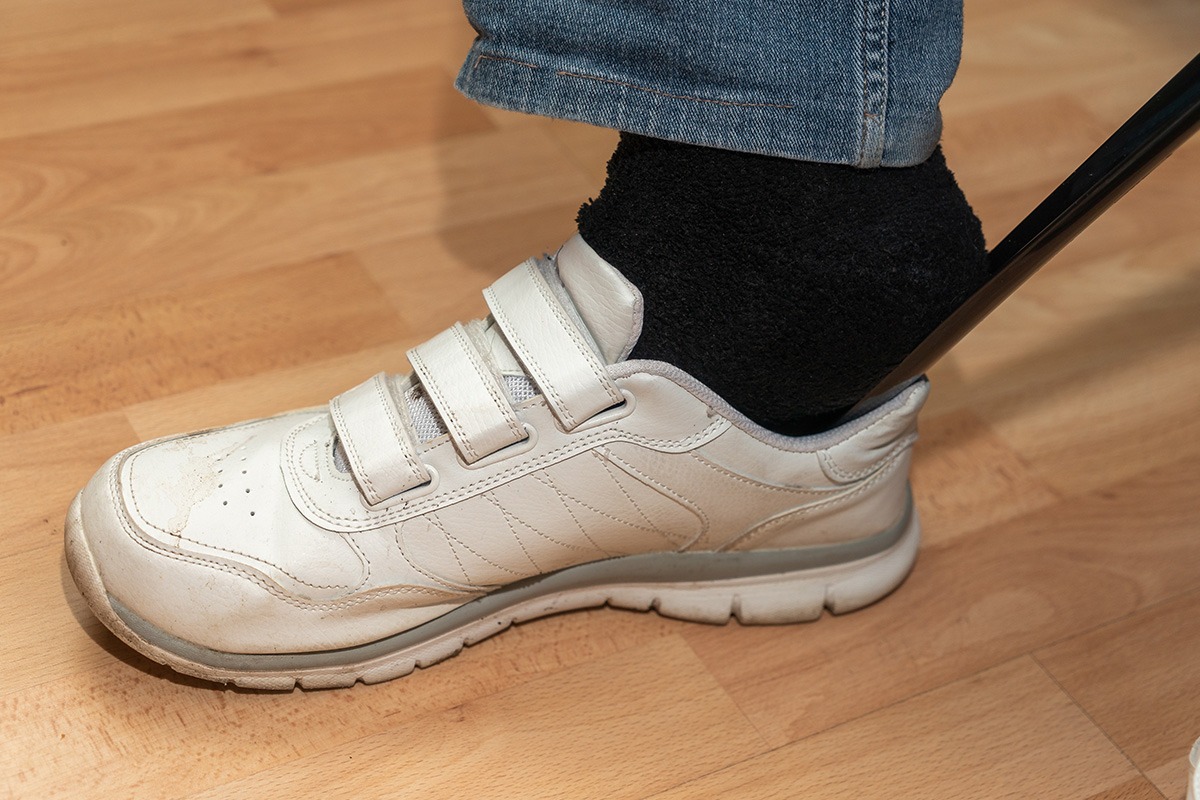
Adaptive clothing is designed to make dressing easier. It may use simpler fasteners or more flexible fabric. Some pieces look like standard clothing from the outside.
Common features include:
- Elastic waistbands
- Wide openings
- Stretchy fabric
- Easy-grip zipper pulls
- Hook-and-loop closures
- Pull-on shoes or elastic laces
Some garments use magnetic closures. Magnets can interfere with certain implanted medical devices. If you have an implanted device, ask your health professional and the device maker before using magnetic clothing. The U.S. Food and Drug Administration explains how magnets can affect some implants.
Adaptive clothing is not one style or one brand. The best choice depends on the exact task and the person’s preferences. PCLA’s guide to adaptive clothing for Parkinson’s offers a closer look at common designs.
What Can Make Dressing Less Frustrating?
There is no single dressing routine that works for everyone. A useful starting point is to name the step that causes the most trouble. It may be reaching an armhole. It may be managing a fastener. It may be keeping steady while reaching the feet.
Common options that people explore with a health professional include:
- Sitting in a stable chair for parts of the routine
- Keeping clothing within easy reach
- Laying clothes out in order
- Choosing simpler fasteners
- Trying one dressing aid at a time
- Allowing more time for the task
These ideas are general education. A qualified health professional can help decide what is safe and appropriate for an individual.
How Can an Occupational Therapist Help with Dressing?
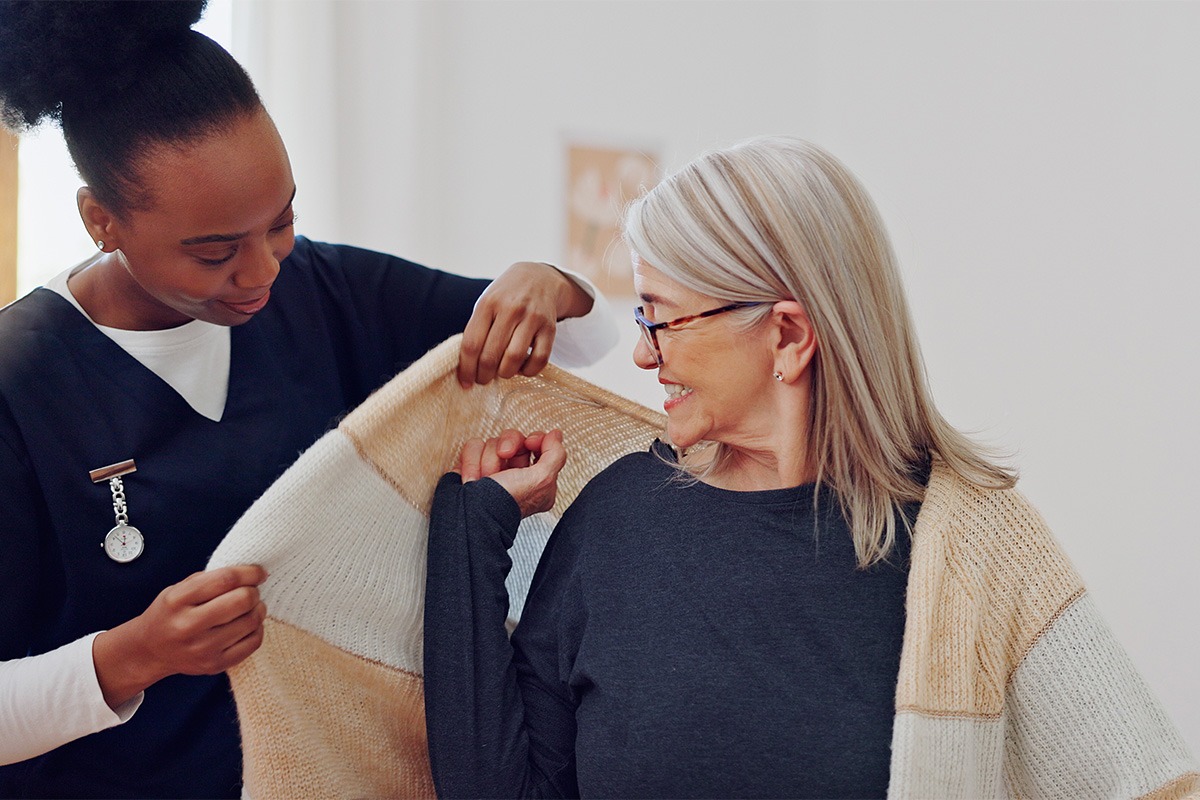
An occupational therapist can look at the task as a whole. They may identify where the movement breaks down and test an aid in the setting where it will be used.
Professional guidance from Parkinson’s UK on occupational therapy notes that a therapist may suggest changes to clothing. A therapist may also recommend equipment or new ways to complete a task.
The goal is to help the person find an approach that fits their abilities and priorities. Please speak with a qualified health professional to learn whether occupational therapy may be appropriate.
How Can Care Partners Help without Taking Over?
Clothing is personal. It can express taste and identity. That doesn't change just because dressing becomes harder.
A care partner can begin by asking which step needs help. The answer may be one sleeve or one zipper. Help can be limited to that part while the person does what remains.
Offering a simple choice can also preserve control. So can allowing time when it is safe to do so. PCLA’s care partner support offers more information for people caring for someone with Parkinson’s.
The Person Using the Shirt Is the Expert
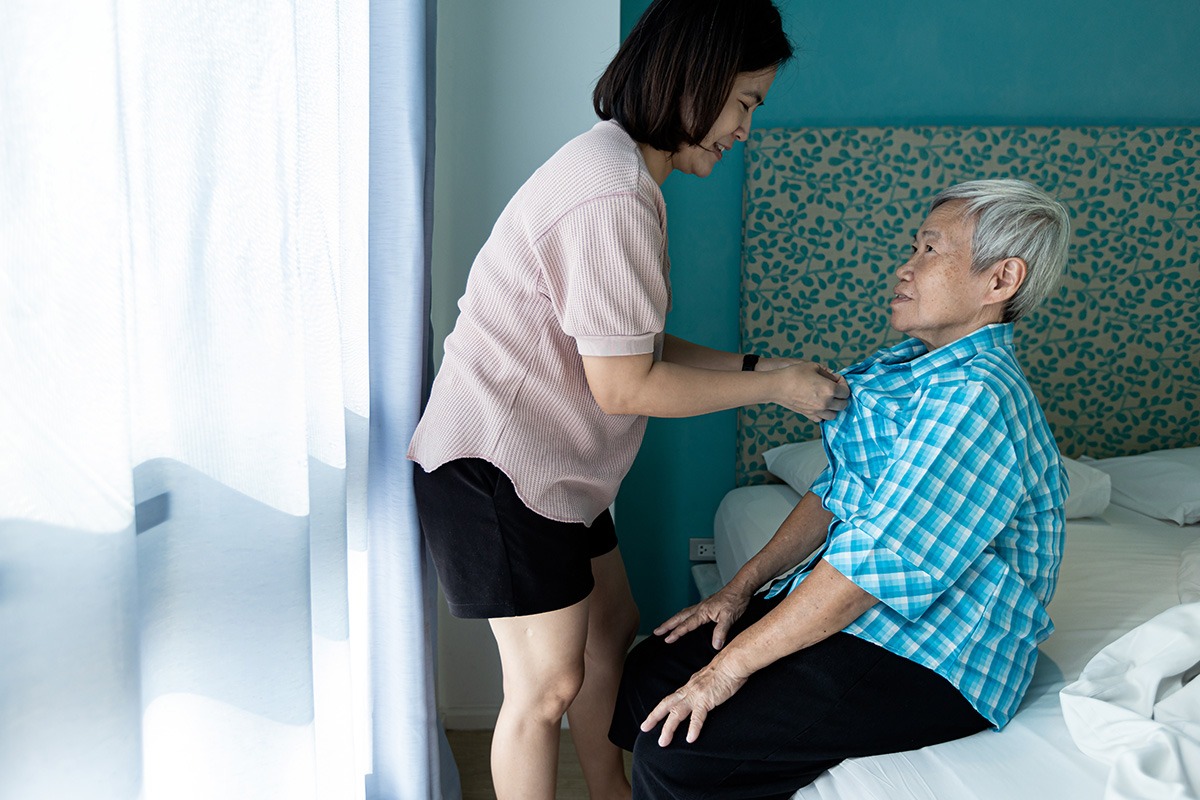
Sandy’s account of getting dressed is honest. A simple shirt can become a puzzle. To help, listen to the person doing the task. Notice where the problem really begins while keeping dignity and personal style at the center.
If dressing changes are affecting you or someone you care for, speak with a qualified health professional. You can also explore PCLA’s Parkinson’s resources or connect with a free PCLA support group.
This article is for general education only. It does not provide medical advice or replace care from a qualified health professional.
오늘 기부하기,
삶을 영원히 바꾸다
PCLA는 여러분과 같은 분들의 아낌없는 기부로 운영됩니다.
파킨슨병으로 영향을 받는 사람들에게 중요한 지원을 계속 제공할 수 있도록 오늘 기부를 고려해 주세요.
